
What tennis betting costs a New Zealand punter in 2026
 Available in US
A ball lands on the chalk, the umpire calls play, and somewhere in Auckland a punter opens an app. In New Zealand the app the law lets them open is a narrow list: TAB NZ, and its sister app Betcha. Since 28 June 2025, no other operator may lawfully take a tennis bet from a person in New Zealand. That single legal fact is the difference between a market a punter can complain about when something goes wrong and one where there is no New Zealand complaint route at all — which is what this page is about. The figures, the matches, the markets and the apps are the second story; the first is what each one costs, in fees, in margin, in turnover and in the things you only find out by reading the small print.

Data current as of 26 October 2026; checked against the Racing Industry Act 2020 and TAB NZ’s published terms.
Table of Contents
- The ten brands a New Zealand punter meets
- How tennis betting works in New Zealand
- The law: who may take a tennis bet in New Zealand
- Safer gambling at TAB NZ
- Predictions, tips and the shape of a tennis market
- What tennis markets look like in the app
- Tournaments: the tennis calendar and what it does to a market
- Operators
- The cost at the counter
- Frequently asked questions
The ten brands a New Zealand punter meets
Tennis betting in New Zealand runs on a split field. Two of the ten names on this list, TAB and Betcha, are the two online brands of the same operator, TAB New Zealand, and are the only providers lawfully taking bets from people in New Zealand. The other eight are bookmakers a New Zealand punter sees advertised or finds through search, but none of them holds a licence that lets them take bets here. DIA told unlicensed providers to withdraw with immediate effect when the law changed. Some have stopped serving New Zealand; others have not. Listing them is not a recommendation. It is the rest of the picture.

The comparison below lists every brand, what each one says it offers on tennis and the legal standing of each in New Zealand. The price column is left blank where the operator’s own published terms do not give a specific market figure for tennis at a specific event on a specific day — a margin for tennis at one bookmaker on one snapshot is not the margin for another market at the same bookmaker, and printing one in the wrong cell is the kind of error a reader cannot afford.
| Brand | New Zealand status | What the operator’s own terms state on tennis |
|---|---|---|
| TAB | TAB NZ brand | Covers racing, rugby, NBA, NFL, tennis, cricket, football, motorsports and esports; pre-match and live markets; same-game multis available on listed events |
| Betcha | TAB NZ brand | Horse, greyhound and harness racing plus rugby, NRL, MMA/UFC, NBA, NFL, tennis, cricket, football, motorsports and esports; in-app betting with live race streaming |
| Millioner | Not licensed in New Zealand | Sportsbook lists football, tennis, table tennis, basketball, ice hockey, American football and baseball, with pre-match and live sections and a separate Virtual Sports area |
| 22Bet | Not licensed in New Zealand | Over 30 market types per event including 1X2, Double Chance, totals, both teams to score, correct score and HT-FT, plus tennis game, set and handicap markets |
| RoyalistPlay | Not licensed in New Zealand | Sportsbook with live betting, sports promotions, results and a schedule, listing football, basketball, tennis, handball, ice hockey, volleyball and table tennis among the top sports |
| FunBet | Not licensed in New Zealand | Sportsbook offers football, ice hockey, American football, basketball, volleyball, tennis, rugby and baseball, with live betting and a 24/7 bookmaker |
| Alawin | Not licensed in New Zealand | Sportsbook covers football, tennis, table tennis, basketball, ice hockey, American football and baseball; Live Betting, Virtual Sports and esports also offered |
| BillyBets | Not licensed in New Zealand | Casino and sportsbook under one account, with football, tennis, table tennis, basketball, ice hockey, American football, baseball, combat sports, esports and virtual sports |
| BigClash | Not licensed in New Zealand | Pre-match and live sports betting across international and local leagues, plus virtual sports and esports on FPS and MOBA titles |
| LegendPlay | Not licensed in New Zealand | Sportsbook with Sports, Live Betting and Virtual Sports sections, with football, tennis, basketball and ice hockey listed |
Two of the ten, then, are a single operator behind two brand names, and the other eight are not licensed to take your bet at all. None of this is a clean “best of” list. It is the legal shape of the market, with the offshore names included so a punter who meets them knows what the picture looks like.
How tennis betting works in New Zealand
Tennis is one of the simplest sports to score, and one of the easiest to bet on because the match has a small number of decision points. A game goes 0 (love), 15, 30, 40; the first to win at least four points with a lead of two takes the game, and a tie at 40-40 is deuce. A set is usually won by the first to six games by a margin of two; at 6-6 a tiebreak is played, first to seven with a two-point lead. A match is best of three or best of five sets — men play best of five at the four Grand Slams, women play best of three everywhere. That skeleton is what every tennis market is built on. The bookmaker is selling a view of who wins, what the score looks like at a given moment, how many games or sets the match runs, and whether a named player reaches a particular round.

TAB and Betcha both run fixed-odds betting on tennis. A fixed-odds bet pays the price you took, no matter where the market drifts afterwards, and the return on a winning bet is straightforward: stake multiplied by the decimal odds. A NZ$10 bet at odds of 2.10 pays NZ$21.00; the punter’s profit is NZ$11.00 because the stake is returned with the winnings. Decimal odds are the convention here, so a quoted price of 1.85 means a NZ$10 stake returns NZ$18.50, profit NZ$8.50. Same-game multis on TAB and Betcha let a punter combine legs from the same match — set winner, total games, first-set winner — into one ticket; the odds multiply, the stake does so do, and the risk is that every leg has to win.
The thing to keep in mind is that the price you see is the price the operator has set, and the operator has set it to keep a margin. On a two-way market at 1.90 and 1.90 the bookmaker holds about 5.3% of every dollar staked across both outcomes — a margin shown as a band, since bookmaker margins vary by market and event rather than sitting on one number. The “overround” is what makes a market a market rather than a fair coin: if both sides offered even money the book is a charity. Reading a price, then, is reading two things at once: what the operator thinks will happen, and what it costs you to take the other side.
What a winning bet pays back
The arithmetic is the simple part. A NZ$20 stake at odds of 2.50 returns NZ$50.00 (stake NZ$20.00 + profit NZ$30.00). A same-game multi of three legs at 1.70, 1.85 and 2.00 multiplies into 6.289, so a NZ$5 stake returns NZ$31.45 if all three win. The hard part is that the stake does not come back on a free bet — a NZ$10 free bet at 3.00 pays NZ$20.00 in profit only, not NZ$30.00 — and that bonus bets at TAB NZ carry their own turnover rules described in the operator’s terms, not on this page.

What the bookmaker keeps
The margin sits inside every price. Take the same two-way market at 1.90 / 1.90: the “true” probability each side prices at is 1 ÷ 1.90, which is 52.63%, and the two probabilities sum to 105.26% rather than 100%. That 5.26 percentage points is the bookmaker’s edge across the whole market — what it expects to keep, before the operator’s own costs and any staking skew. A margin of around 5% is the band tennis two-way markets often sit in; it can run higher on player-specific props or smaller markets, lower on outright winner markets where the bookmaker lays a longer field. What a punter pays for the bet is that 5%, and what the operator pockets is the difference between what it took in and what it paid out across all losing tickets.
The law: who may take a tennis bet in New Zealand
The Gambling Act 2003 is the framework, but the rule that decides who can take a tennis bet sits in a different place. The Racing Industry Act 2020, as amended by the Racing Industry Amendment Act 2025, inserted section 74AAA: no person other than TAB NZ may offer racing betting, sports betting or other racing or sports betting to a person in New Zealand, regardless of where that person is resident or incorporated. The change took effect on 28 June 2025. The Department of Internal Affairs told providers serving New Zealand to withdraw with immediate effect.
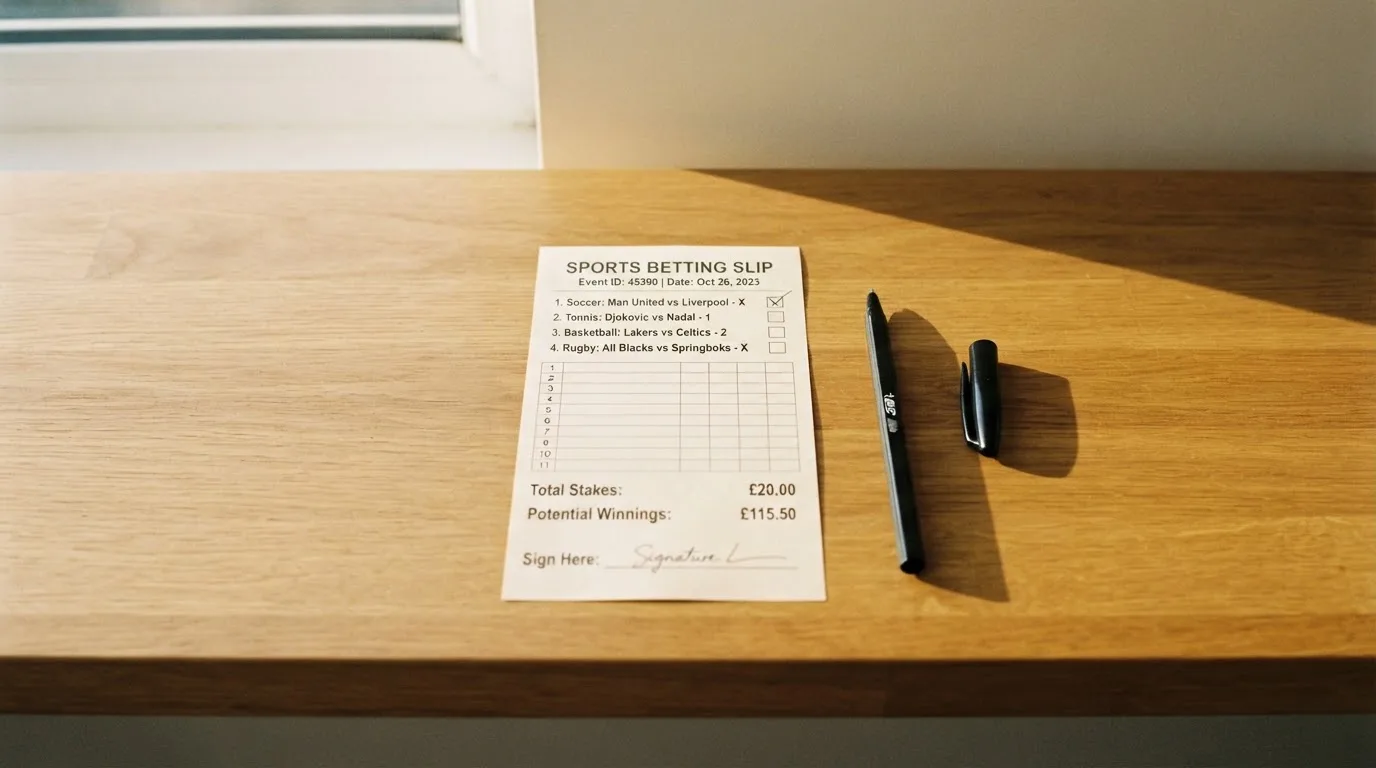
There is no licence to apply for. There is no licence register for betting, because the law names one operator and one operator only. TAB New Zealand is the licence holder; TAB and Betcha are its two online brands, run in partnership with Entain under a 25-year agreement signed in 2023, which gives Entain a 50/50 share of gross profits with at least NZ$150 million a year to TAB NZ for the first five years and a one-off NZ$100 million payment from Entain to the racing sector. The point of that deal is the structure underneath the monopoly — what TAB NZ can afford to pay out, what the racing codes receive, what flows back to the sport.
The Online Casino Gambling Act 2026 is a different statute for a different product. It licenses online casino gambling, not sports betting, and TAB New Zealand winning the right to apply for a casino licence does not extend the betting monopoly. A punter looking at a casino licence and assuming it covers their tennis bet is reading the wrong page of the rule book.
The greyhound picture is also worth flagging. Greyhound racing is closing in stages from 1 August 2026, and from that date offshore operators may not take bets on greyhound races either. Tennis is not affected, but the racing calendar around it is.
What “not licensed in New Zealand” means in practice
Eight of the ten names on this page name no licence that lets them take bets from a person in New Zealand. Some hold a Curaçao licence, some an Anjouan licence, one a Tobique Gaming Commission e-gaming licence. None of those licences gives the right to take bets from people in New Zealand. The New Zealand law does not block the offshore websites — there is no geo-block — it puts the liability on the offshore operator.

What that costs a punter, in plain terms: there is no New Zealand complaints route for a dispute, no New Zealand harm-minimisation framework applies to that account, and DIA has publicly warned that overseas operators may be in jurisdictions with minimal consumer safeguards, may not return unspent credits and may not pay out large wins. The player side is softer. Section 19(4) of the Gambling Act 2003, inserted in 2025, says an individual may not be convicted for placing a bet with an offshore operator in breach of section 74AAA — no published penalty for a player was found. The honest framing is what DIA itself writes: the law targets the operator, the player carries the consumer risk, and there is no New Zealand safety net behind the offshore account.
Safer gambling at TAB NZ
The safer gambling tools at TAB NZ live in the app. TAB NZ lists deposit limits, time-outs and self-exclusion, and the same exclusion applies across both TAB and Betcha. The free Gambling Helpline is 0800 654 655; the text line is 8006; both are listed in TAB NZ’s published app listing. Safer Gambling Aotearoa is the wider New Zealand service. The age for TAB NZ betting is 18 — betting under 18 is an offence under section 89 of the Racing Industry Act 2020; a land-based casino has a different age (20), and the two are not interchangeable.

TAB NZ is required to keep the risks of problem and underage gambling minimised, and pays a Problem Gambling Levy of 0.74% — in force from 1 July 2025 to 30 June 2028. The levy is the operator’s cost, not the punter’s, but it is the funding line behind the helpline.
There is no single national online-betting exclusion register. The register the casino law will require is for online casinos only, and tennis betting sits under the racing-and-sports regime. A self-excluded punter at TAB is out across both brands; an offshore account is on the punter to manage.
The thing to know if a punter’s habits are moving is that the tools are there and they work, and that the cost of using them is zero. The cost of waiting is paid in lost stake.
Predictions, tips and the shape of a tennis market
Searchers of tennis betting tips and tennis predictions in New Zealand are buying one of two things: a system that names winners, or a model of how prices move. Neither exists. A search for “how to always win in tennis betting” returns the same answer it returns everywhere — there is no system that beats a margin-bearing market over a long enough run for the system to be the edge, because the price is set to make a margin. A search for “betting expert tennis” returns tipsters, and a tipster’s record is the record you have to read, not the headline accuracy.

What does work is small and unglamorous. Studying form on the surface in play (the four Grand Slams are hard, clay, grass, hard again). Knowing the head-to-head. Knowing that best-of-five changes the math at the Slams. Watching the warm-up tournaments and reading the injury news. None of it removes the margin, and none of it guarantees a winning bet. What it does is reduce the cases where a punter pays full price for a view the market has already priced in.
Bankroll discipline is the other piece. A bankroll is the part of the betting money a punter can afford to lose, set in advance. Bet sizing — flat stakes as a percentage of the bankroll rather than a fixed amount — is the discipline that stops a bad run from ending a bankroll. A punter who bets to clear a bonus, or who doubles down after a loss, is paying a price the bookmaker does not need to charge.
The honest line on predictions: nobody can name who will win, and a tipster who claims they can is selling the absence of the edge. The page cannot name winners and does not pretend to.
What tennis markets look like in the app
Tennis markets inside the TAB and Betcha apps follow the sport. The match-winner market is the entry point — pick who wins the match. Set betting is the next — pick the score in sets. Game betting is finer: who wins the next game, who wins the first set, total games over or under a line, who wins a specific set. Handicaps are the bookmaker’s way of giving a shorter price on the favourite, by asking them to win by a margin. Over/under on games or sets runs the line on match length. Each-way bets are mostly a racing convention rather than a tennis one, because tennis matches have a single outright winner.
Outright markets are the tournament markets: pick the winner of the Australian Open, French Open, Wimbledon, US Open. Outrights pay the best prices because the field is large, but a NZ$10 stake at 25.00 on a player who lifts the trophy returns NZ$250, with NZ$240 profit. The risk is the field; the price compensates for it.
Same-game multis, available on TAB and Betcha, combine legs from a single match into one ticket. The legs multiply into a single price, the stake stays as it is, and every leg has to win. The bookmaker’s margin on a multi is the compounded margin of the legs — three legs at 1.85, 1.85 and 1.85 give a combined price of 6.33, but the implied probability of three “true” 50/50 outcomes is 12.5%, and 6.33 is the equivalent of a 15.8% probability, so the multi carries a wider margin than any of its legs alone. A multi looks like a bargain because of the headline price; the math says otherwise.
Settling and stakes
TAB NZ settles tennis markets according to its published betting rules. A retirement before the first set is complete usually voids the bet; a retirement afterwards usually settles on the player who progresses. The exact rule sits in TAB NZ’s terms — a punter who wants the boundary line for their bet reads it there, not on a marketing page.
Stakes and limits are operator-level, not statutory. TAB NZ sets its own minimum stake, its own maximum payout, and its own limit per event. The TAB NZ app shows the stake box and the maximum stake on the slip; the rest is in the published terms. There is no statutory per-bet cap; the cap that exists is TAB NZ’s own.
A worked margin
Take an illustrative two-way market at decimal odds 1.90 / 1.90 — an example price, not a quoted one. Each side implies a probability of 1 ÷ 1.90 = 52.63%, and the two probabilities sum to 105.26%. The bookmaker’s margin is 105.26% − 100% = 5.26%, which means a payout share of about 94.74% across the whole market. In a band, a tennis two-way market sits around 5% margin — sometimes lower on outright winner markets, sometimes wider on player-specific props. That 5% is what the punter pays, on average, every time they take a price.
Tournaments: the tennis calendar and what it does to a market
The tennis calendar is a year-round event list, and the four Grand Slams set the price. The Australian Open (hard court, January) opens the year. The French Open (red clay, late May to early June) is the clay-court peak. Wimbledon (grass, late June to early July) is the grass-court peak. The US Open (hard court, late August to early September) closes the major season. Around them, the ATP and WTA tours run year-round, with Masters 1000 events for the men and Premier events for the women sitting below the Slams. The ITF is the highest governing body.

Wimbledon 2026 was played from 29 June to 12 July 2026; Jannik Sinner beat Alexander Zverev in the men’s final and Linda Noskova beat Karolina Muchova in the women’s final. The full year’s calendar offers more tennis than any punter can follow, and the betting calendar follows the same slant — outright markets open weeks before a Slam, and live markets run for the duration.
What a Grand Slam costs to bet on
A Grand Slam is a best-of-five match for the men and best-of-three for the women, which changes the math. A men’s match at the Slams has more sets, more games, more decision points, and more time for form to show. Outright markets are wider and pay more; set-betting markets are deeper; same-game multis have more legs to choose from. The bookmaker’s margin on outright markets is often tighter than on a single match, because the field is long and the price reflects the field. The margin on a set-betting market on a specific match is often wider, because the lines are more granular and the bookmaker has fewer bets to balance the book.
The cost of the bet, then, depends on which market the punter takes. A punter who chases the headline outright price is paying a tighter margin. A punter who chases the set-betting line on a specific match is paying a wider one. Both bets can win; both bets cost the punter their margin.
Operators
The ten operators are split by legal standing in New Zealand. TAB and Betcha are the two online brands of TAB NZ and the only providers lawfully taking bets from people in New Zealand. The other eight are bookmakers a New Zealand punter meets but cannot legally place a bet with — DIA told unlicensed providers to withdraw with immediate effect when the law changed, and the eight below have not been granted any New Zealand licence.
TAB — the lawful online bookmaker
TAB is the retail and online bookmaker of TAB NZ, the licence holder for racing and sports betting in New Zealand. The app covers horse and harness racing, rugby union and rugby league, NBA, NFL, tennis, cricket, football, motorsports and esports, with pre-match and live markets. TAB NZ takes fixed-odds and tote (pool) bets; its published betting rules set the markets. The app carries a 17+ App Store age rating while stating that customers must be 18 or over to bet, and includes Trackside live race streaming, racing form, Blackbook and Jockey Challenge tools, and a simplified wallet for deposits and withdrawals. The first version of the app was released on 8 September 2014.
The legal standing is the point. TAB is the only lawful bookmaker for tennis in New Zealand, the only one with a New Zealand complaints route, the only one with the New Zealand harm-minimisation framework applied. What that costs a punter is zero in regulatory risk; what it costs in price is the standard market margin, which a punter sees in the odds and cannot negotiate.
Betcha — the same operator under a new brand
Betcha is the second online brand of TAB NZ, run by Entain New Zealand Limited and first released on the New Zealand App Store on 6 August 2024. The app covers horse, greyhound and harness racing plus rugby, NRL, MMA/UFC, NBA, NFL, tennis, cricket, football, motorsports and esports. It is published by Entain New Zealand Limited, which is the partner running TAB NZ’s business under the 25-year agreement with TAB New Zealand.
The trap with Betcha is treating it as a rival bookmaker to TAB. It is the same operator behind a different skin. An exclusion at TAB applies across both brands; a deposit limit set on one applies to the other. The cost of a Betcha account is the same as the cost of a TAB account in every way that matters to the punter.
Millioner — not licensed in New Zealand
Millioner is a sportsbook that lists football, tennis, table tennis, basketball, ice hockey, American football and baseball, with a separate Live Betting section and a separate Virtual Sports area. The brand names no licence that lets it take bets from people in New Zealand. DIA told unlicensed providers to withdraw with immediate effect when the law changed.
A punter with a Millioner account carries the consumer risk DIA has publicly warned about: minimal consumer safeguards in some jurisdictions, no guarantee unspent credits will be returned, and possible non-payment of large wins. There is no New Zealand complaints route for a Millioner dispute and no New Zealand harm-minimisation framework applied to the account.
22Bet — not licensed in New Zealand
22Bet runs a sportsbook that offers over 30 market types per event, including 1X2, Double Chance, totals, both teams to score, correct score and HT-FT, plus tennis game, set and handicap markets. The brand names a Curaçao licence (8048/JAZ), held by TechSolutions Group N.V., which gives no right to take bets from people in New Zealand.
The volume of markets is what 22Bet sells. The cost is the absence of a New Zealand licence — no New Zealand complaints route, no harm-minimisation framework applied here, and the consumer-risk warnings DIA publishes about overseas operators. A punter who wants a tennis game, set or handicap market can find them on 22Bet; the legal standing does not change.
RoyalistPlay — not licensed in New Zealand
RoyalistPlay runs a sportsbook with live betting, sports promotions, results and a schedule. The top sports listed include football, basketball, tennis, handball, ice hockey, volleyball and table tennis, with separate e-sports and Predictions sections. The brand names a Tobique Gaming Commission e-gaming licence (No. 0000002), held by Novatrix SRL, which gives no right to take bets from people in New Zealand.
The topline here is the same as the others: the brand’s own terms list the markets, the licence in its name does not reach New Zealand, and the punter carries the consumer risk.
FunBet — not licensed in New Zealand
FunBet runs a sportsbook with odds on football, ice hockey, American football, basketball, volleyball, tennis, rugby and baseball, with live betting and a bookmaker described as open 24/7. The brand names no licence that lets it take bets from people in New Zealand.
The “24/7 bookmaker” pitch is the marketing surface; the regulatory surface is the same as every other offshore on this list.
Alawin — not licensed in New Zealand
Alawin runs a sportsbook that covers football, tennis, table tennis, basketball, ice hockey, American football and baseball, with Live Betting, Virtual Sports and esports also offered. The brand names no licence that lets it take bets from people in New Zealand.
The breadth of the offering is the pitch; the licence standing is the same. No New Zealand complaints route, no New Zealand harm-minimisation framework.
BillyBets — not licensed in New Zealand
BillyBets runs a casino and a sportsbook under one account, and the sportsbook covers football, tennis, table tennis, basketball, ice hockey, American football, baseball, combat sports, esports, virtual sports and live betting.
The casino-plus-sportsbook bundle is the pitch. The casino licence and the sports betting licence are separate permits; a casino licence never covers a tennis bet, and the operator’s casino offering does not extend the licence to the sportsbook.
BigClash — not licensed in New Zealand
BigClash runs pre-match and live sports betting across international and local leagues, plus virtual sports and esports betting on FPS and MOBA titles. The brand names a Curaçao licence (8048/JAZ), which gives no right to take bets from people in New Zealand.
The esports and virtual offering is the standout on the page; the legal standing in New Zealand is the same as every other Curaçao-licensed operator on this list.
LegendPlay — not licensed in New Zealand
LegendPlay runs a sportsbook with Sports, Live Betting and Virtual Sports sections, listing football, tennis, basketball and ice hockey. The brand names an Anjouan Gaming Authority licence, which gives no right to take bets from people in New Zealand.
The pitch is the breadth of the sportsbook. The standing is the same.
The cost at the counter
The angle of this page is cost, and the costs come in four shapes. The first is the regulatory cost: the difference between TAB NZ, where the New Zealand harm-minimisation framework applies and a complaints route exists, and the eight offshore operators on this list, where none of that reaches. The second is the margin cost: a tennis two-way market priced at 1.90 / 1.90 holds about 5.3% in overround, and that 5% is the bookmaker’s take across the market. The third is the product cost: a same-game multi at three legs at 1.85 carries a compounded margin wider than any single leg; a player prop on a single match usually carries a wider margin than the match winner; an outright tournament market usually carries a tighter margin because the bookmaker lays a longer field. The fourth is the personal cost: a deposit limit set in advance, a stake sized as a percentage of a bankroll, and a punter who walks away from a losing session.
The honest take is that tennis betting in New Zealand is narrower than it looks from the search results. Two lawful brands, one operator behind them, and a field of eight offshore names that no New Zealand licence lets serve you. The punter who bets at TAB or Betcha pays the standard market margin and gets the full New Zealand safety net behind the bet. The punter who bets offshore pays whatever margin the offshore operator sets, and gets no New Zealand safety net at all. The price is the same word in both cases — “price” — and it is not the same thing in either.
Frequently asked questions
How does tennis betting work?
A tennis bet is a wager on the outcome of a match, a set, a game or a specific event within a match. The match winner market is the simplest — pick who wins the match. Set betting asks for the score in sets; game betting asks for the next game, the first-set winner, or the total number of games. Handicaps give a shorter price on the favourite by asking them to win by a margin; over/under markets run a line on match length; outright markets ask who wins a tournament. A winning bet pays stake multiplied by decimal odds, with the stake returned on a real-money bet and not returned on a free bet.
How can a punter always win at tennis betting?
They cannot. No system, model, tipster or staking plan removes the margin the bookmaker builds into every price, and a price built to keep a margin cannot be beaten over a long enough run by following the same price. What does work is small and unglamorous — surface form, head-to-head, recent matches, the warm-up tournaments — and it reduces the cases where a punter pays full price for a view the market has already priced in. Bankroll discipline is the other piece: a stake sized as a percentage of the bankroll, set in advance, and not chased after a loss. Nobody can name who will win a match, and a tipster who claims they can is selling the absence of the edge.
How do I bet on tennis and win?
Win means profit over a session, and profit comes from price discipline rather than prediction. The bookmaker’s margin sits inside every price, so the first move is to find the markets where the margin is tightest — outright tournament markets are usually tighter than set-betting markets on a single match. The second move is to skip the markets where the margin is widest — same-game multis with three or more legs carry compounded margin; player props on a single match usually carry wider margins than the match winner. The third move is bankroll: a stake sized as a percentage of the bankroll, a stop-loss at the session, and no chase. None of this predicts the winner; all of it reduces the price the punter pays per bet.
Which bookmaker may lawfully take sports and racing bets in New Zealand?
TAB New Zealand is the only provider lawfully offering racing and sports betting to people in New Zealand, under section 74AAA of the Racing Industry Act 2020 (in force since 28 June 2025). TAB and Betcha are its two online brands, run in partnership with Entain under a 25-year agreement signed in 2023. There is no licence to apply for and no licence register for betting, because the law names one operator. Other bookmakers — Curaçao-licensed, Anjouan-licensed, Tobique-licensed or unlicensed — do not hold a New Zealand licence and may not lawfully take a bet from a person in New Zealand.
How is the return on a bet worked out from the stake and the odds?
For a real-money bet at decimal odds, the return is stake multiplied by the odds, and the profit is stake multiplied by (odds − 1). A NZ$10 stake at 2.10 returns NZ$21.00, profit NZ$11.00. For a combination bet (a multi), the odds of the legs multiply into a single price, and the stake is multiplied by that combined price. For a free bet whose stake is not paid back with a win, only the profit is paid: a NZ$10 free bet at 3.00 pays NZ$20.00, not NZ$30.00. The calculation is statistical — an average over many bets under the stated assumptions, not a guaranteed outcome for any single punter.
What is the bookmaker’s margin and how can it be seen in the odds?
The margin is the share of every dollar staked the bookmaker expects to keep across a whole market, before costs. On a two-way market at 1.90 / 1.90, each side implies a probability of 52.63%, the two probabilities sum to 105.26%, and the 5.26 percentage points above 100% is the bookmaker’s edge — the margin. A payout share of 94.74% across the whole market is the same number seen from the other side. Margin varies by market and event rather than sitting on one number; outright winner markets are often tighter, player props often wider, same-game multis the widest. Reading a price, then, is reading two things at once — the operator’s view of the outcome, and the price the punter pays to take the other side.
Prepared by the Nztennisodds editorial staff.